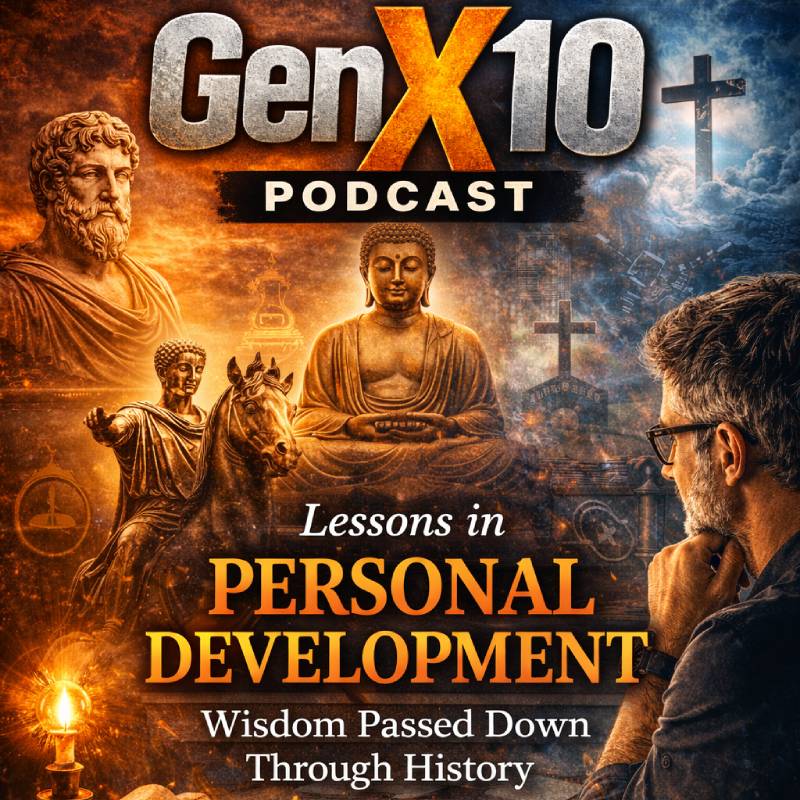
Lessonss in Personal Development - Wisdom Passed Down Through History
your invited to download and share all GenX10 Podcasts
Welcome back to the GenX10 podcast, the podcast that explores how the wisdom of the past can shape our future. I'm your host, Cameron, and today we're diving deep into a topic that's as old as humanity itself: personal development.
You know, when we think about personal development, we often picture self-help books, seminars, maybe a life coach. But the truth is, this journey of self-improvement has been with us for millennia. Think about it. Ancient civilizations, long before the printing press, even before widespread literacy, were grappling with the same questions we are today: How can I live a better life? How can I be a better person? How can I understand myself and the world around me?
We find echoes of this in the earliest forms of recorded knowledge. We have tablets, not just from a few thousand years ago, but potentially hundreds of thousands of years ago, that hint at early attempts to understand human behavior, to codify moral principles, and to guide individuals towards a more fulfilling existence. These weren't necessarily called "self-help books" back then, of course. They were often woven into the very fabric of society, passed down through oral traditions, rituals, and communal practices.
And this is where things get really interesting. A significant portion of what we now recognize as personal development actually formed into what we call religions. Consider the core tenets of many major faiths. They often offer a framework for ethical living, a path to inner peace, a way to connect with something larger than oneself, and guidance on how to overcome personal flaws and achieve spiritual growth. The parables, the scriptures, the philosophical texts within these religions – they are, in many ways, ancient personal development guides. They provide narratives, principles, and practices designed to help individuals navigate the complexities of life, cultivate virtues, and achieve a state of well-being.
Take, for instance, the concept of mindfulness. While it's a buzzword in modern wellness circles, its roots can be traced back to contemplative practices found in Buddhism, Hinduism, and even early Christian monasticism. The idea of observing one's thoughts and emotions without judgment, of cultivating a present-moment awareness, is a powerful tool for self-understanding and emotional regulation, and it’s been around for centuries.
Or consider the emphasis on ethical conduct and virtue. Philosophers like Aristotle, in his Nichomachean Ethics, explored the concept of eudaimonia, often translated as "flourishing" or "living well." He discussed the importance of cultivating virtues like courage, temperance, justice, and wisdom through habit and practice. These are not just abstract ideals; they are practical guides for living a good and meaningful life.
This idea of learning from those who have walked the path before us is crucial. Much of personal development, both ancient and modern, stems from mentors. Whether it was a shaman guiding a community, a philosopher instructing students in an academy, or a spiritual leader imparting wisdom, the mentor-mentee relationship has always been a powerful engine for growth. These mentors, through their own lived experience and accumulated knowledge, offer a roadmap, providing insights, encouragement, and accountability.
Think of the great thinkers and spiritual leaders throughout history. Socrates, with his relentless questioning, guided people to examine their own beliefs and assumptions. Buddha, through his teachings on the Four Noble Truths and the Eightfold Path, offered a comprehensive system for understanding suffering and achieving liberation. Even in more secular contexts, figures like Benjamin Franklin, with his self-improvement maxims and his dedication to constant learning, embodied the spirit of personal development.
And where did these mentors often get their wisdom? From other mentors, and from the accumulated knowledge of those who came before them. It’s a continuous chain of learning and transmission. This is why so many ancient texts, even those we might not immediately categorize as "self-help," contain profound insights into the human condition. The Stoics, for example, with their emphasis on virtue, reason, and acceptance of what we cannot control, offer timeless advice for resilience and inner peace. Marcus Aurelius’s Meditations, written as personal reflections, are still read and studied today for their practical wisdom on handling adversity and living a principled life.
Even the structure of many religions reflects this mentorship model. The concept of disciples, of followers learning directly from a teacher, is central. This direct transmission of knowledge and practice, often accompanied by personalized guidance, is incredibly effective. It’s not just about reading a book; it’s about observing, practicing, and receiving feedback from someone who has mastered the principles.
In our modern world, we’ve rediscovered and repackaged many of these ancient ideas. Books like "The Seven Habits of Highly Effective People" by Stephen Covey, "How to Win Friends and Influence People" by Dale Carnegie, or "Man's Search for Meaning" by Viktor Frankl, all draw upon timeless principles of human nature, ethics, and resilience. They might use contemporary language and examples, but the core messages often resonate with wisdom that’s been passed down for generations.
The difference today, perhaps, is the sheer volume of information available. We have access to more books, courses, podcasts, and online resources than ever before. But with this abundance comes the challenge of discernment. How do we sift through it all? How do we find what’s truly valuable and applicable to our lives?
This is where returning to the foundational principles becomes so important. Understanding that personal development isn't a new fad, but a deeply ingrained human pursuit, can help us approach it with a more grounded perspective. It’s about recognizing that the struggles and aspirations of people thousands of years ago are not so different from our own. They, too, sought to understand themselves, to improve their character, and to live lives of purpose and meaning.
And just as they relied on mentors and the wisdom of the past, we can too. We can learn from the great philosophers, the spiritual leaders, and the authors who have dedicated themselves to exploring these themes. We can also seek out mentors in our own lives, individuals who can offer guidance and support on our personal development journey.
This is why we’re so passionate about building a community here at the GenX10 podcast. We want to foster a space where we can explore these ideas together, share our experiences, and learn from one another. Because ultimately, personal development is a journey, not a destination, and it's a journey best undertaken with support and connection.
And speaking of support and connection, I want to tell you about a fantastic resource that embodies this spirit. It's called itsallteam.com. They are dedicated to building communities and providing tools and resources for personal and professional growth. They understand the power of collaboration, mentorship, and shared learning. If you're looking for a place to connect with like-minded individuals, to find inspiration, and to access valuable resources that can help you on your own journey, then you absolutely need to check them out.
So, as you navigate your own path of personal development, remember the ancient roots of this pursuit. Remember the wisdom embedded in religions, the guidance offered by mentors, and the timeless principles found in texts that have stood the test of time. And remember that you don't have to do it alone.
Visit itsallteam.com today. Explore what they have to offer, and join a community that’s committed to helping you thrive.
Thanks for tuning into the GenX10 Podcast. We’ll be back next week with more insights into how we can all live our best lives. Until then, keep learning, keep growing, and keep connecting.


